- Cox’s Chairman and Founder took part in one of the business meetings held as part of the 81st United Nations General Assembly, which brings together representatives from nearly 190 countries in New York to address the main global challenges.
- Cox’s Chairman highlighted the need to advance regulatory certainty, bankable projects and public-private partnerships to accelerate investment in energy and infrastructure.
- Riquelme’s institutional agenda in the United States will continue throughout the week with his participation in various meetings related to Ibero-America, culminating on Friday with the closing of a conference focused on the region’s challenges and opportunities.
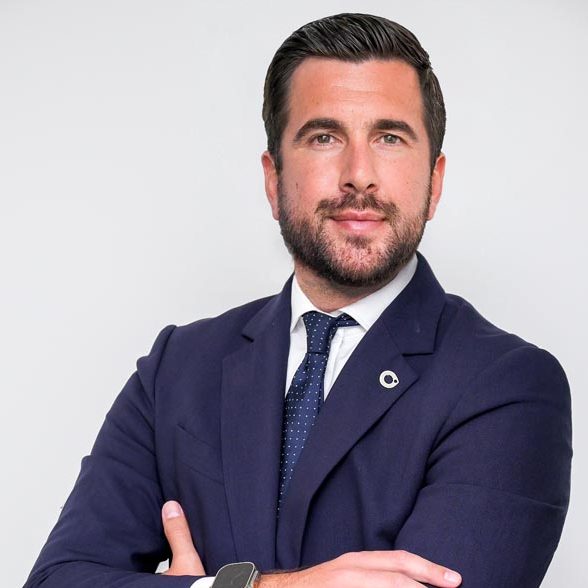
Madrid, September 23, 2026. As part of the 81st United Nations General Assembly, being held from September 22 to 28 in New York and bringing together representatives from nearly 190 countries, Enrique Riquelme, Chairman and Founder of Cox, has participated in various meetings focused on the main economic, social and energy challenges at a global level.
As part of the conference program, Cox’s Chairman took part in the panel “Boosting Competitiveness: A Bi-Regional Alliance to Finance a Just Energy Transition and Resilient Growth,” co-organized by CEAPI (Business Council Alliance for Ibero-America) and UNDP (United Nations Development Programme), where he shared the company’s perspective on the challenges and opportunities of the energy transition in Latin America and the Caribbean.
During his intervention, Enrique Riquelme stressed that “we are experiencing a global context of high uncertainty and volatility, and these types of meetings are essential spaces for dialogue to generate opportunities for regional cooperation in the face of an adverse global situation.” He also added that this context “hampers investment and the ability of governments to act in areas as critical as energy and water, essential infrastructure for life, the economy, productivity, digitalization, industrialization and social stability.” He also warned that the current geopolitical context makes it more difficult for governments to invest and to promote strategic projects in areas such as energy and water, infrastructure that he described as essential for life, productivity, digitalization, industrialization and social stability.
One of the key messages conveyed by Cox’s founder was the need to strengthen electricity grids to enable an effective energy transition. In this regard, he stated that “the present and future of the energy transition depends on the existence of modern, flexible and interconnected grids,” emphasizing that the electrification of the economy, the expansion of data centers, artificial intelligence and electric mobility will require significantly greater energy capacity and grid quality than today.
Enrique Riquelme’s institutional agenda in the United States will continue over the coming days with further participation in meetings focused on strengthening relations between Europe and Latin America. Next Friday, Cox’s Chairman will close a conference focused on the challenges and opportunities facing Ibero-America, reaffirming the company’s commitment to developing international partnerships in strategic sectors such as energy, water and infrastructure.