- The rollout integrates local green hydrogen production with its direct use in strategic sectors such as Almería’s agri-food industry and the port and airport logistics hubs in Cádiz.
- The six municipalities involved, across the provinces of Almería, Cádiz, Huelva and Seville, will become local benchmarks for the production and consumption of green hydrogen.
- Cox’s initiative is part of the regulatory framework promoted by the Government of Andalusia and supported by the Andalusian Energy Agency through European funding.
Madrid, June 23, 2026. Cox, a global water and energy utility, today announced an investment of more than €20 million in Andalusia to develop new Municipal Green Hydrogen Energy Communities, under the regulatory framework established by the Government of Andalusia and the Andalusian Energy Agency through European funds.
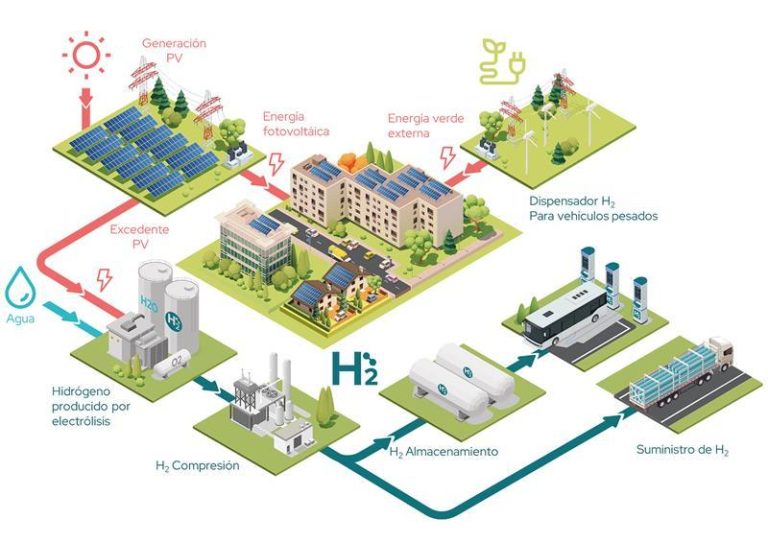
The initiative promoted by Cox includes the implementation of three distinct models of municipal green hydrogen energy communities, tailored to the productive and logistical characteristics of each territory. The aim is to generate a direct impact on strategic sectors of the Andalusian economy, from the agri-food industry in Almería—where green hydrogen will help reduce logistics costs and enhance agricultural competitiveness—to the major logistics hubs in Cádiz, including the Port of Algeciras and Jerez Airport, while also supporting local energy consumption in selected municipalities.
In Huércal-Overa and Níjar (Almería), Cox is developing a regional green hydrogen distribution model designed for areas that will remain outside the future hydrogen pipeline network. The project will enable hydrogen to be distributed across the province. It is particularly significant for the agri-food sector, as more than 3,000 trucks transporting fruit and vegetables currently operate in the province every day. The gradual introduction of green hydrogen is expected to reduce fuel costs by around 5%, strengthening the competitiveness of Almería’s agricultural sector while contributing to a more sustainable logistics model.
Meanwhile, in Jerez de la Frontera and Algeciras (Cádiz), green hydrogen production is linked to strategic transport and logistics infrastructure, specifically the Port of Algeciras and Jerez Airport. This model will support emissions reductions in industrial activities and mobility associated with critical infrastructure.
Finally, in the municipalities of Moguer (Huelva) and Utrera (Seville), the projects are focused on local energy consumption, enabling greater energy self-sufficiency and positioning these municipalities as local leaders in the production and use of green hydrogen across Europe.
Low-Impact Infrastructure
The facilities have been designed to minimize land use while integrating seamlessly into their surroundings. Each energy community will combine a solar power plant and a green hydrogen production facility on a site of less than 2,000 square metres, facilitating both deployment and replication.
These Municipal Green Hydrogen Energy Communities form part of the Citizen Energy Community (CEC) model that Cox is rolling out across Spain. This model enables municipalities to reduce their electricity bills by between 30% and 65% while representing a significant step forward in their evolution into smart cities.
The CEC model includes centralized energy management through a control centre, solar self-consumption, the electrification of municipal vehicle fleets, the promotion of sustainable transport solutions, digitalized waste management and the modernization of public lighting. On the energy side, it also incorporates smart grids, energy storage systems and advanced monitoring and efficiency solutions, supporting the development of intelligent urban environments.
Green Hydrogen as a Strategic Pillar
With this investment, Cox further strengthens its commitment to green hydrogen as one of the key pillars of the energy transition. Fabián Pérez, General Manager of Cox Clientes, said: “Green hydrogen is essential to decarbonizing sectors that are difficult to electrify, such as heavy transport, port and airport logistics, and certain industrial activities.” He added: “The model we are developing in Andalusia combines local renewable generation, hydrogen production and intelligent energy management to create decentralized energy ecosystems that provide greater stability, competitiveness and energy autonomy for local communities.”
Economic and Social Impact
In addition to its energy benefits, the projects will drive local job creation and stimulate economic activity in the participating municipalities. They also include social impact programmes featuring specialized training and educational outreach initiatives designed to raise awareness and understanding of green hydrogen and the energy transition among local communities.